
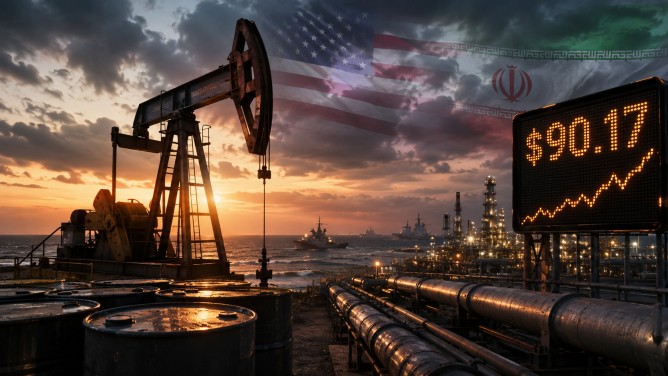
Oil prices surged significantly as the two-month negotiation period between the United States and Iran concluded without reaching a peace agreement. This development has heightened concerns about the ongoing conflict potentially continuing to disrupt global energy supplies. Brent crude oil prices have exceeded $90 per barrel, hitting around $91.63, marking the highest level since July 30. This increase follows a demand from US President Donald Trump for Iran to surrender, coupled with a warning that the conflict could escalate if diplomatic solutions are not achieved.
The strategic Strait of Hormuz, a vital channel for global oil shipments, has been a focal point as tensions rise. The number of commercial vessels navigating this crucial passage has dropped considerably, sparking worries about extended disruptions in oil supply lines. The already tense situation was exacerbated by a reported attack on a cargo vessel transiting the strait, intensifying fears regarding the safety of maritime operations in the region.
Amid these developments, Iran has suggested it might adopt a more aggressive military posture if diplomatic talks fail to yield results. This stance, alongside the reported vessel attack, has prompted investors to brace for the possibility of a prolonged disruption in oil supplies. Such a scenario, involving a sustained closure or reduced traffic through the Strait of Hormuz, could further drive up crude oil prices.
Experts caution that the ongoing conflict in the Middle East, when combined with the existing war in Ukraine, could create additional volatility in global energy markets. This situation may lead to further increases in oil and gas prices, exacerbating the challenges faced by economies worldwide. The interconnected nature of these conflicts underscores the precarious balance of the current global energy landscape.