
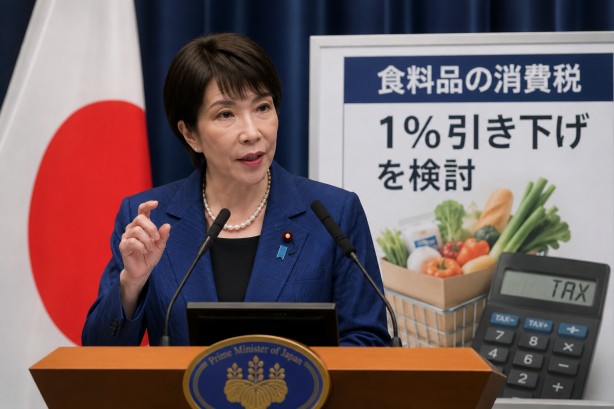
Japanese Prime Minister Sanae Takaichi is set to instruct the ruling Liberal Democratic Party to advance a plan to temporarily slash the consumption tax on food items from 8% to 1%. This reduction is proposed to last for two years, beginning in April 2027. The move aims to alleviate the financial burden on consumers, particularly in light of stalled cross-party tax reform discussions.
The proposal, which has garnered support from both the government and the ruling coalition, includes offering cash assistance to low- and middle-income households. This initiative seeks to provide approximately ¥600 billion in financial aid, further easing the cost-of-living challenges faced by many Japanese citizens.
By implementing this tax cut, the government hopes to stimulate economic relief and address the deadlock in negotiations over broader tax reforms. The reduction is part of a broader strategy to support struggling households while maintaining fiscal responsibility during challenging economic conditions.
The Japanese government is working to finalize this policy by early August. To ensure the timely execution of the tax cut, the necessary legislation is expected to be introduced during an extraordinary parliamentary session later this year. This would allow the new tax rate to be in effect by next April, providing immediate relief to consumers once implemented.